Movie Info
Movie Year:
Cast:
Tom Hiddleston
,
Rachel Weisz
,
Simon Russell Beale
,
Ann Mitchell
,
Jolyon Coy
,
Karl Johnson
,
Harry Hadden-Paton
,
Sarah Kants
,
Barbara Jefford
Screenplay:
Terence Davies
,
Terence Rattigan
Genre:
Romance,
Drama,
Studio:
Others
Genre:
Action/Adventure
Other
Horror/Suspense
Television
Romance
Sci-Fi/Fantasy
Thriller
Animation
Comedy
Documentary
Drama
Kids/Family
Studio:
DVD Release:
2012/07/24
Theater Release:
2012/03/30
Blu-ray Release:
2012/07/24
Blu-ray 3D Release:
No release information.
DVD Release:
(ex. 2002/10/21)
Synopsis:
Tagline:
The wife of a British Judge is caught in a self-destructive love affair with a Royal Air Force pilot.
May 02, 2012
In a recent blog post for The New York Review of Books, J. Hoberman ponders the (ultimately rhetorical) notion of whether Terence Davies is the greate ...
In a recent blog post for The New York Review of Books, J. Hoberman ponders the (ultimately rhetorical) notion of whether Terence Davies is the greatest living British filmmaker. He trots out Stephen Frears, Peter Greenaway and Ken Loach before suggesting Davies’s only true competitor for the hypothetical crown: Mike Leigh. I must confess I don’t know enough about any of the above directors to construct any kind of convincing defense or condemnation (my own response might be something like exasperated belligerence at Frears and Greenaway, begrudging interest in Loach, and a genuine admiration for Leigh), but I’ve no doubt that Davies has made a masterpiece with "The Deep Blue Sea."
Based on Terence Rattigan’s 1952 stage play of the same name, “The Deep Blue Sea” is, as Hoberman suggests, "the most obviously and provocatively 'English' of Davies’ films." I'm not qualified to contemplate what is or is not ‘English’ either, but I think I could venture to guess what drew Davies to the play beyond some unquantifiable, ‘innate’ quality, and that is that Davies has never shied away from certain autobiographical qualities in his work: both “Distant Voices, Still Lives” and “The Long Day Closes” are admittedly so, while his prestige literary adaptations tend to also take place in the past.
In a recent interview conducted by a Time Out Chicago critic (and former InRO staffer), A.A. Dowd observed that "All your films are period pieces," and asked, "Will we ever see a Terence Davies movie set in contemporary Britain?" Davies responded, insisting that "The England I grew up in has vanished. Even after the war—I was born in ’45—people behaved properly. And I miss that. It’s gone from England. We’re the most uncivilized country in Europe. I love my country very much, but I’m its severest critic. And it’s imploded. The reason we’re obsessed with the Second World War is that was the last time we were important." One could venture several other hypotheses, such as Davies's admiration for Hollywood films of the period, as well as a confluence of traditional, Great American Song Book hymns and classical music. And while one might be hesitant to chalk too much up to his homosexuality, he’s clearly attracted to portraying an era of repression. Certainly, it doesn’t take much imagination to transpose Rachel Weisz’s lovestruck wife, drawn to a destructive but satisfyingly carnal relationship, to that of a young man, inexplicably drawn to something that society tells him is wrong. Some critics have questioned, even criticized, why Weisz’s character, Esther, would settle for either her rich, older statesman husband or Tom Hiddleston’s callow, yet sensual, RAF pilot. Yet Davies gives all the information we need: the husband’s goodnatured nonchalance, the lover’s charismatic allure.
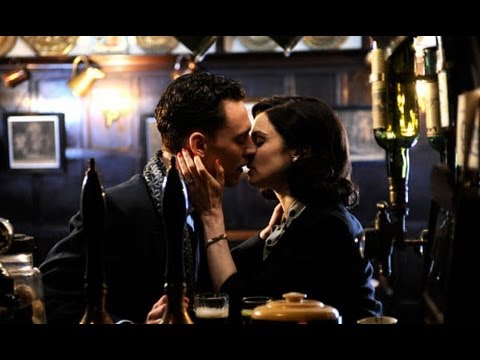
Fortuitously, filmgoers in Chicago, New York and a few other markets had the opportunity to see Davies’s 1991 masterpiece, “The Long Day Closes,” just weeks before the official release of “The Deep Blue Sea,” and it’s interesting to see how consistent his visual schemes have stayed between these two ‘bookend’ films. In both, he’s clearly eschewing what we might consider traditional narrative, indulging in glimpses, vignettes and carefully constructed moments that gradually congeal into a whole. One of Davies’s favorite devices is a symmetrical composition that either breaks apart or comes together. Here, we see the married couple traversing a long hallway, politely acknowledge one another, and then go their separate ways, exiting the frame simultaneously. Conversely, Davies’s frames the lovers together, his camera swirling slowly over their cavorting bodies, in a supremely erotic display. A fetching, lovely moment: spooning with her sleeping paramour, Esther gazes upon him, and, with a barely perceptible hesitation, licks his back. It’s a fleeting thing, but one that speaks volumes and, at least to my mind, becomes a crucial lynchpin to the remainder of the narrative. At once timid and transgressive, naïve and sensual, she would never attempt such a gesture with her ‘proper’ husband, and yet she’s unable to control herself in the presence of this new thing. Ironically, Davies is able to suggest Weisz’s discomfort while simultaneously reveling in a kind of togetherness—Davies includes two different group sing-a-longs, the camera gradually drifting over a crowd of people indulging in a kind of camaraderie. She’s always just slightly apart, whether in the pub or in a bomb shelter (a flashback that at least vaguely suggests why she married an older man in the first place—post-war security).
In retrospect, I’ve probably done a poor job describing the pure joy of watching this film, the appeal of Davies’s elliptical structuring, his fuzzy, pastel color pallet, and the languid, woozy camera that lovingly surveys plumes of smoke and slowly tracks over careful, yet never fetishized period detail. What begins as a potential tragedy (it’s no spoiler to say that the film opens with a failed suicide attempt by Weisz's Esther) ends in a kind of triumphant, if understated, bit of self-actualization. Esther proves her resilience, moving from a safe husband to a selfish lover, and ultimately finding strength within herself.
==Written by Daniel Gorman==
==From: In Review Online (www.inreviewonline.com)==
Based on Terence Rattigan’s 1952 stage play of the same name, “The Deep Blue Sea” is, as Hoberman suggests, "the most obviously and provocatively 'English' of Davies’ films." I'm not qualified to contemplate what is or is not ‘English’ either, but I think I could venture to guess what drew Davies to the play beyond some unquantifiable, ‘innate’ quality, and that is that Davies has never shied away from certain autobiographical qualities in his work: both “Distant Voices, Still Lives” and “The Long Day Closes” are admittedly so, while his prestige literary adaptations tend to also take place in the past.
In a recent interview conducted by a Time Out Chicago critic (and former InRO staffer), A.A. Dowd observed that "All your films are period pieces," and asked, "Will we ever see a Terence Davies movie set in contemporary Britain?" Davies responded, insisting that "The England I grew up in has vanished. Even after the war—I was born in ’45—people behaved properly. And I miss that. It’s gone from England. We’re the most uncivilized country in Europe. I love my country very much, but I’m its severest critic. And it’s imploded. The reason we’re obsessed with the Second World War is that was the last time we were important." One could venture several other hypotheses, such as Davies's admiration for Hollywood films of the period, as well as a confluence of traditional, Great American Song Book hymns and classical music. And while one might be hesitant to chalk too much up to his homosexuality, he’s clearly attracted to portraying an era of repression. Certainly, it doesn’t take much imagination to transpose Rachel Weisz’s lovestruck wife, drawn to a destructive but satisfyingly carnal relationship, to that of a young man, inexplicably drawn to something that society tells him is wrong. Some critics have questioned, even criticized, why Weisz’s character, Esther, would settle for either her rich, older statesman husband or Tom Hiddleston’s callow, yet sensual, RAF pilot. Yet Davies gives all the information we need: the husband’s goodnatured nonchalance, the lover’s charismatic allure.
Fortuitously, filmgoers in Chicago, New York and a few other markets had the opportunity to see Davies’s 1991 masterpiece, “The Long Day Closes,” just weeks before the official release of “The Deep Blue Sea,” and it’s interesting to see how consistent his visual schemes have stayed between these two ‘bookend’ films. In both, he’s clearly eschewing what we might consider traditional narrative, indulging in glimpses, vignettes and carefully constructed moments that gradually congeal into a whole. One of Davies’s favorite devices is a symmetrical composition that either breaks apart or comes together. Here, we see the married couple traversing a long hallway, politely acknowledge one another, and then go their separate ways, exiting the frame simultaneously. Conversely, Davies’s frames the lovers together, his camera swirling slowly over their cavorting bodies, in a supremely erotic display. A fetching, lovely moment: spooning with her sleeping paramour, Esther gazes upon him, and, with a barely perceptible hesitation, licks his back. It’s a fleeting thing, but one that speaks volumes and, at least to my mind, becomes a crucial lynchpin to the remainder of the narrative. At once timid and transgressive, naïve and sensual, she would never attempt such a gesture with her ‘proper’ husband, and yet she’s unable to control herself in the presence of this new thing. Ironically, Davies is able to suggest Weisz’s discomfort while simultaneously reveling in a kind of togetherness—Davies includes two different group sing-a-longs, the camera gradually drifting over a crowd of people indulging in a kind of camaraderie. She’s always just slightly apart, whether in the pub or in a bomb shelter (a flashback that at least vaguely suggests why she married an older man in the first place—post-war security).
In retrospect, I’ve probably done a poor job describing the pure joy of watching this film, the appeal of Davies’s elliptical structuring, his fuzzy, pastel color pallet, and the languid, woozy camera that lovingly surveys plumes of smoke and slowly tracks over careful, yet never fetishized period detail. What begins as a potential tragedy (it’s no spoiler to say that the film opens with a failed suicide attempt by Weisz's Esther) ends in a kind of triumphant, if understated, bit of self-actualization. Esther proves her resilience, moving from a safe husband to a selfish lover, and ultimately finding strength within herself.
==Written by Daniel Gorman==
==From: In Review Online (www.inreviewonline.com)==
Master chronicler of post-War England, Terence Davies directs Rachel Weisz as a woman whose overpowering love threatens her well-being and alienates the men in her life. In a deeply vulnerable performance, Rachel Weisz plays Hester Collyer, the wife of an
Movie Disc Details
No Movie Disc Detail yet.