Invite
|
Forum
|
Sign up
|
Sign in
Home > Movies > Public Enemies
Public Enemies
Public Enemies (2009)
4.0
(43 Ratings)
4 Reviews | 5 Short Comments | 75 Collectors | 20 Times Watched
0 Remixes | 0 MovieMarks
Write a Short Comment
Post to MoovieLive
Add to Collection
Watched!
Tell a Friend
Buy Movie Disc
Report this movie
Movie Info
Movie Year:
Director:
Movie Year:
2009
Screenplay:
Genre:
Thriller, Other, Action/Adventure, Sci-Fi/Fantasy, Romance, Drama,
Studio:
Others
Genre:
Action/Adventure
Other
Horror/Suspense
Television
Romance
Sci-Fi/Fantasy
Thriller
Animation
Comedy
Documentary
Drama
Kids/Family
Studio:
Disc Release:
2009/12/08
Theatrical Date:
No release information. Add
Disc Release:
(ex. 2002/10/21)
Theatrical Date:
(ex. 2002/10/21)
Synopsis:
Tagline:
America's Most Wanted
 
Reviews
Jun 09, 2010
The disenfranchised, dystrophic probation era is brought to life in Michael Mann’s Public Enemies. The criminals housed in Public Enemies are represen ...
The disenfranchised, dystrophic probation era is brought to life in Michael Mann’s Public Enemies. The criminals housed in Public Enemies are representations, like in American Gangster, of the role models current hooligans and “gangstas” regard with such high esteem. Film-wise, Public Enemies is not perfect but it is imbued with brilliant moments. Public Enemies is set in the early parent of last century in the United States and is in part about a romance that develops between two of the film’s main characters.

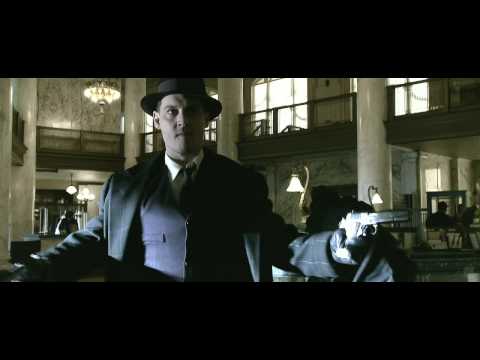
Prolific bank robber John Dillinger (Johnny Depp), is first presented as a successful, professional bank robber, icon-a-sized and admired by the public (he never steals from people depositing in the banks he robs). He is a quasi-Robin Hood, a poor man that steals from the rich and insured to make himself rich. Many people admire that about him, especially during the economic hardships of that time period. He is personified more as a rogue, a thorn in upper society’s heel, than a murdering criminal in newspaper and on the radio, even though that is exactly what he is.

Soon the criminal climate changes for crooks of Dillinger’s persuasion. Crime becomes organized and that organization’s longevity is threatened by the sophomoric antics of Dillinger and his brethren. The more face time they garner in newspapers, the more the FBI turns the heat up, which is bad for organized crimes’ business. Dillinger finds himself at an underworld crossroads, a criminal outcast and a dinosaur, destined for unceremonious extinction. Dillinger and his associates soon become desperate and begin breaking their own rules, leading to their further decline.

There are seven key moments in Public Enemies that make this film worth seeing. The first is the capture of Dillinger when is escorted at night by police and his fans line the street. At first he looks at them, then he smiles and then he gives them a curt wave with handcuffed hands. He is their hero, a celebrity, an admired celebrity. You see it on his face.

The second is his famous escape from prison using a fake gun and his persona’s bravado. There is a tense moment a stop sigh after the escape where time slows for him and the other escapee but they keep their cool and get away.

The third is when FBI agent Melvin Purvis (Christian Bale) knocks on the door of an apartment he has gotten a tip on. Inside is a man having dinner with a woman. The man is compliant and when asked, offers identification. This is one of the reasons why his name, Baby Face Nelson (Stephen Graham), and his associates are still remembered today. Nelson is completely calm while questioned quickly by Agent Purvis, used to surprise and tense situations.

The fourth involves Nelson again. He is on the run and finds himself on a dark road. A federal agent approaches him in a car from behind. He turns around so the occupant of the car can not see his face, makes no sudden movements, backs up to the driver’s window turns and fires. Then, channeling James Cagney, asks the cop as he shots him: “Where do you want it? High or low?”

The fifth involves Dillinger’s squeeze, Billie Frechette (Marion Cotillard). Marion shows why she is an Oscar winner during her police integration scene. Her character is very brave in the face of physical abuse she has probably never faced before.

The sixth is the type of scene you rarely see in a Hollywood film anymore. It involves Dillinger as he views the Clark Gable gangster movie Manhattan Melodrama at the Biograph Movie Theater. What begins as a character in a movie watching a movie escalates into a brief internal examination of Dillinger, his profession, what he perceives himself to be, and the doom that surrounds him and his brethren. As Gable’s character is about to be executed, saying goodbye to the incarcerated and talking about dying as he lived, the camera methodically zooms in on Dillinger’s eyes. What is being said on screen, what is happening has an intrinsic connection to him and Mann takes the time to let the audience know it.

The seventh is when Dillinger, being on the Ten Most Wanted list, most-likely the most hunted man in the United States, has the audacity of walk into a police station without disguising his appearance once-so-ever. He proceeds to a police unit adorned with his name, assigned to hunt him down. Not only does he casually stroll through their offices, examining their evidence, he announces his presence by asking the score of an in-progress baseball game. No one recognizes him or gives him a second thought. The whole time during the scene, the viewer probably thinks: You have got to be kidding me. Balls.

Michael Mann’s Public Enemies is a well acted gangster film that suffers from excessive length and moments of lows before the seven enumerated highs. If some of the fat had been trimmed from the script, the film would have had a shorter running time and its momentum would have been sustained. This was not the case and the film suffered because of it but there are those moments, please remember, that make Public Enemies worth seeing.

==Written by Reginald Williams==

==From: Film-Book dot Com==

Aug 18, 2009
The moody and intense "Public Enemies" is a curious picture, and it's going to be a great divider, creating two polarized camps of love and hate. It's ...
The moody and intense "Public Enemies" is a curious picture, and it's going to be a great divider, creating two polarized camps of love and hate. It's paradoxically wandering and aimless and at other times fully engaging. It's one half of a great film that sometimes becomes — as Michael Mann seems to be as a person — too meditatively obsessed with details that detract from the big picture, but also create a super detailed and rich universe to be transported into. It might just boil down to what you truly value in a film and your subjectivity, but there's a strong chance that those without patience will find "Public Enemies" dull, and as erratic as bursts of tommy gun fire.

It's one of the most bold and unconventional summer blockbusters released in recent memory, but let's judge it as a stand-alone picture and not what it should or shouldn't be in the middle of the summer. After all, its date is really a ruse; it's a Michael Mann film, it's not a tentpole blockbuster, and it just happens to be released in July because of its lucrative billing as a "gangster epic," with the possibility of heavyweight stars Johnny Depp and Christian Bale going toe-to-toe. That alone is admittedly a compelling premise, but if you're looking strictly for an action film, you've come to the wrong place. And although frequently gripping, intense and masterfully crafted, Mann's 10th feature is also as uneven as his oeuvre. (Many will disagree on that point. Let them.) It's emotionally aloof, slow to coalesce and editorially neutral to almost an infuriating degree, not to mention free of most traditional narrative beats, which can make for a laborious experience. Characters don't have arcs, and in fact "Public Enemies" so defies the three-act structure that it resembles more of a chronicle of two Alpha Males on a doggedly linear collision course than it does any conventional story. And yet still there's ancillary pleasures and elements to admire.

Marketed as a 1930s action gangster picture, what Mann has really delivered is a meticulous, slow-burning arthouse saga that is incredibly idiosyncratic and bares his stamp everywhere. In this respect, the film resembles the POV-less, two-part "Che," realized by Stephen Soderbergh. Expository dialogue is kept to a minimum and we learn about every character through their actions, not their words. And while the apolitical nature of "Che" was by design, and perhaps necessary given the polarizing figure, this tact utilized in a 1930s gangster picture feels like an odd choice, especially given the lead character, John Dillinger.

The digital photography is another strange aesthetic decision which will leave some viewers feeling one layer further removed, with its emotional coolness. While it can take one out of the picture initially – and the digital framing does look out of time – it's a far more pleasing and successful approach than the grainy mess of "Miami Vice." (Though the shaky, extreme close-ups feel anachronistic in both).

Zero character motivations or back story are given here, and the audience joins what feels like a story in progress. Dillinger (Depp) is in the middle of his notorious crime wave and one so huge it creates ripples around the then still-provincial United States. A veritable folk hero, he's essentially unattainable by the law, as the man-of-the-people celebrity status he enjoys affords him undercover asylum in any city he decides to cool off in. But the politically motivated J. Edger Hoover (unctuously played by Billy Crudup with an adenoidal and off putting accent) has other plans and anoints Melvin Purvis (Christian Bale) to be the star officer of his nascent FBI agency after the golden-boy policeman becomes distinguished for terminating prominent bank robber Pretty Boy Floyd (Channing Tatum, in a brief cameo) with extreme prejudice. A champion of press attention and manipulation, Hoover ostensibly has a long term game plan; realizing the capture of Dillinger and infamous criminals like Baby Face Nelson (Stephen Graham) will get his embryonic Bureau off the ground and the funding it needs, but this can only really be inferred (and if you haven't read the script you might be scratching your head in certain parts).

Mann's movies have been increasingly free of the familiar rhythms of mainstream moviemaking, sans big dramatic turning-points, and 'Enemies' is no different, perhaps subtle to a fault. The understatement extends to the performances too: Christian Bale's FBI man is so subterranean, his character feels either incredibly ill-defined or impossible to get a read on; and truthfully it feels like a bit of both as his only clear motivation seems to be to uphold justice which makes him one-dimensional. (Bale also might want to take a romantic comedy role soon, since his unsmiling method'ness is getting to be a bit dour of late.) Other characters – and there are many of them – are equally poorly sketched: Dillinger gang member Charles Makley (Christian Stolte) is clearly a loose cannon, but that's about all we get out of him. Overloaded with name-brand actors, aside from maybe Stephen Dorff's Homer Van Meter character – who still has about as much character depth as "loyal Dillinger gang member" – the rest of the names, Giovanni Ribisi, David Wenham, Lili Taylor, Leelee Sobieski, Carey Mulligan, Rory Cochrane and Stephen Lang, are essentially glorified cameo placeholders without a ton of substance. Mann seems so beholden to history that he fails to dramatize much with his docu-drama-like style. Yet at the same time, he clearly wishes to romanticize Dillinger and it's almost as if he's at odds with himself. As per usual, the director seems to be obsessed with the nature of great men and how to fetishize their manly actions, many times at the expense of forward narrative. It's like a careful character study of actions, but not personality and unlike "Che," the actions don't reveal a ton about the still mysterious characters.

The saving grace, both character and acting wise, is the charismatic Johnny Depp and the underused Marion Cotillard. Their love story, which sort of leads Dillinger astray, is presumably the focal point, but there's so many threads in the picture that the crux becomes hazy. Still, as overly serious as many Mann films can be, Depp's sly, sang-froid and jovial performance helps the picture from backsliding too much into humorless territory (something that truly marred "Miami Vice"). His relaxed, live-for-today attitude is well-rounded, possessing a duality of hubris and caution with fiery, impulsive passion. Naturally then, Dillinger is a contradictory persona, giving his coat to a woman he just kidnapped momentarily (just to get away of course) and telling old timers to take their personal earnings back ("we're here for the bank's money, not yours"). A cold blooded killer who also happens to be a people person who cares. The beautiful belle, Cotillard as Dillinger's "blackbird" babe, is steely-eyed, resolute and extremely capable, but her character doesn't have a lot to do other than put up mild defenses to Depp's brazen charms. Moreover, the reasons for Dillinger's passionate love seem rail thin; he seemingly is only magnetically drawn to her for her bewitching looks, as we really don't get to know them together as a couple.

If 'Enemies' attempts to say anything at all, it's perhaps that all of us must adapt or face extinction. While love is part of Dillinger's downfall, what really brings on his fate is his need for attention and thrills. Bank robbing, even by the 1930s is too loud of a game. It draws plenty of Federal attention and headlines that are bad for business and his criminal underworld peers (characterized by a slickster John Ortiz) quickly shut him out (they're already on to quieter, state of the art illegal business – using a vast phone network and taking advantage of the coastal time zone differences to rig bets on horse races that haven't taken place yet). Displacing the order of things, Dillinger is persona non grata everywhere and his demise seems inevitable.

'Enemies' is immense and the symphonic grandeur and scope will surely beguile those seduced with craft. An immersive experience, the biggest strength of the somewhat aimless first half of the picture is just how ensconced the viewer becomes in Mann's precisionist world. The filmmaker only deals with five course meals, no truffles here. When Purvis' pursuit finally starts to box-in Dillinger, making him "feel the heat," the picture starts to light up with thrilling and intense action sequences; something finally feels like it's at stake. When the throttle is let loose, the picture roars. These sequences in the third act are taut and at times mesmerizing, but they also arrive during the three-fourths mark of a two hour and 20 minute film with no discernible structure. A little too late is perhaps an overstatement, but not far off. Mann is no doubt a director of vision and the initial experience of the sweeping third act is electric, but by this point, the connection between audience and character feels largely distant. There is power and resonance in the delivery and well-observed execution of "Public Enemies," but the deliberate pace and internal-world characterizations frustratingly mute the overall impact.

==Written by Rodrigo Perez==

==From: In Review Online (www.inreviewonline.com)==
Jul 09, 2009
Michael Mann has worked with some of the best actors in the business -- Al Pacino and Robert De Niro in Heat, Tom Cruise in Collateral, Daniel Day-Lew ...
Michael Mann has worked with some of the best actors in the business -- Al Pacino and Robert De Niro in Heat, Tom Cruise in Collateral, Daniel Day-Lewis in The Last of the Mohicans, Russell Crowe in The Insider, and now Johnny Depp and Christian Bale in his latest gangster-drama Public Enemies. Is this his greatest collaboration, or, indeed, his greatest movie? Well, no, but it's nonetheless a solid entry in his body of work; a competent, compelling accomplishment that rings true and feels real from start to finish.

Depp plays John Dillinger, one of America's most notorious criminals and bank robbers. Dillinger and his gang of friends regularly rob banks throughout the country in the midst of a booming crime wave in 1930s America. Heading up the investigation to bring him down is FBI agent Melvin Purvis (Bale), who is chosen specifically by J. Edgar Hoover as the man to get the Public Enemy Number One.

Usually opting for the more stately, structured motion picture, here Mann chooses for a digital and often hand-held style of camera work. One could argue that shooting the film in this way doesn't suit the classy '30s time period, and outside looking in, that appears to be the case. However, in context of the film it completely works, giving the piece a raw, realistic, feel, and putting us right in the thick of the action and the drama.

What Mann shows is that he entirely understands how much of a notorious figure John Dillinger really was. Much like train robber Jesse James, Dillinger was almost a hero to the people, even in spite of the publicly reckless and dangerous acts that he committed. Depp plays the man as cool and collected, a man who even in the midst of a furious shoot-out knows what he's doing. And crucially, Depp never goes over-the-top with the role.

Bale's appearance in the film marks his second role in one of this summer's blockbusters, the first being Terminator: Salvation. That machine filled world wasn't one which called for Bale's true acting talent, and even if Public Enemies is obviously far more about acting, the role of the committed Purvis doesn't bring out his best, either. This is Depp's movie, with Bale very much playing second-fiddle, and even the fair amount of screen time given to him doesn't change that. Depp does all the heavy-lifting, which is fair considering the movie is all about his character and no one else. The spotlight is always on Depp, even when he's not on-screen.

Even if Depp is kept in mind pretty much all the time, there's something to be said for the supporting performances. They are enjoyable in that they jab in and out when needed. The likes of Stephen Dorff, David Wenham, James Russo, Billy Crudup and Stephen Graham all provide fantastic support to highlight Depp even more than he does on his own.

At a lengthy 140 minutes, Public Enemies may stretch the average moviegoer who is looking for nothing but gunplay, but even at that length, the film is still bursting at the seams with details. The sheer depth of the piece should find similar filmmakers green with envy. It may take a few viewings to fully observe what Mann has presented us with here, and so for the first watch it's best to just let it all wash over you and to enjoy the thrills and drama it offers.

There's a lot going on in Public Enemies, but Mann covers all the bases with great aplomb. I admit that for some people the thrills related to the crime aspects (the bank robberies in particular) may overshadow the drama, but I found the film dealt with both aspects with equal success. The bank robbery scenes are very well done, Mann spends enough time with them (after all, that's what Dillinger did best) but stops short of wallowing in them. Mann knows how to choreograph an action scene, and there's one forest action sequence in particular that rivals his genius shoot-out sequence in Heat. The scene here provides a fine balance of drama and thrills, excitement and tension, which is pretty much the full package as modern crime/gangster films go.

Elegant, classy cinematography can be found here from Dante Spinotti, who marks his fifth collaboration with Mann. In spite of its rugged, rough-around-the-edges style and because of the digital and hand-held camera work, Spinotti gives the film that much needed sophistication.

Where I felt Public Enemies skips a beat is in the side storyline of Dillinger and his girlfriend Billie Frechette (Marion Cotillard). The inclusion of the relationship between the two, particularly the fact that it just comes in from nowhere, feels a bit rushed and unfinished. Billie is the catalyst for much of Dillinger's actions ("Sooner or later she will go to him, or he's gonna come for her," Bale's Purvis confidently states at one point), but the emotional hook never quite is enough to support the thread. The film relies on that emotional connection, and since it's not entirely there, the piece feels a bit cold in its conclusion.

But in spite of that one misstep (which in its entirety doesn't amount to anything too damaging), Public Enemies is a brilliant piece of modern crime filmmaking from one of the best in the business. The movie is raw yet sophisticated with an equal dose of thrills and drama, and features a superb performance from the ever-impressive Depp. Michael Mann's best work may still be Heat (which this actually feels like a period version of in certain ways), but Mann can rest assured that with Public Enemies he has continued to prove just how good he really is as a director.

==Written by Ross Miller==

==From: Movie World (www.movie-world.moonfruit.com)==
Since crime auteur Michael Mann, like his protagonists, plays by his own rules, Public Enemies eschews back story and motivation for a closely-observed, action-packed examination of men at work. FBI supremo J. Edgar Hoover (Billy Crudup) kick-starts a nationwide manhunt when he proclaims John Dillinger (Johnny Depp, in top form) Public Enemy #1. Hoover taps Agent Melvin Purvis (Christian Bale) to bring the Tommy Gun-toting bank robber in by any means necessary (the agency also targets Pretty Boy Floyd and Baby Face Nelson). If Dillinger had split the scene then and there, he might have enjoyed a happier fate, but he falls for beautiful coat-check girl Billie Frechette (Marion Cotillard, whose open-hearted performance makes her the most sympathetic character in the film). In the end, though, Dillinger is the captain of his own destiny: his loyalty to his girl and his gang overpowers his desire to live free. Though the director also set his first film, Thief, and third series, Crime Story, in his native Chicago, Public Enemies plays more like Heat in Depression-era garb. In that L.A. policier, Al Pacino's cop develops a grudging respect for Robert De Niro's criminal, but letting a lawbreaker go free isn't an option. In this case, however, the tight-lipped Purvis never develops the same sort of esteem for Dillinger--or Hoover--making him the more tragic figure. If Public Enemies is less overtly commercial than The Untouchables or Bugsy, it's still the best mainstream gangster epic in ages and ranks among Mann's finest works. --Kathleen C. Fennessy
Short Comments

By Baby Posted on 03/22/2010

love it!!! soo cool!! ;)

By r6m20s50 Posted on 03/18/2010

Excellent performance by lead actors make this film powerful.

By djn001 Posted on 01/10/2010

This should make the Top 10 List of the worst movies ever made. Absolutely no entertainment value at all.

By JJ MB Posted on 12/23/2009

John Dillinger war ja eine Person die wirklich existierte, worauf ich heraus will, es handelt sich um eine wahre Geschichte zur Zeit der Prohibition, also Anfang der dreissiger Jahre. Was mich an diesem Film beeindruckte war die Präzission der Schnitte, die Kamereinstellungen und ich finde, das alle Schauspieler überzeugen und sich in die Zeit um 1930 versetzen konnten, so kam es bei mir zumindest an. Ein spezielles Kompliment an Johny Depp, ich denke es gibt kaum eine Rolle die er nicht überzeugend spielt. Es ist doch eindrücklich, wie er sich in jedem Streifen, in die von Ihm dargestellte Person hinversetzen kann. Der Film selbst hat viel Action, die Jagd des FBI auf Dillinger und seine Gang ist halt schon übersäht mit Schiessereien, aber es mag ja sein das dem auch so war. Was mich auch faszieniert ist, das viele Szenen an Originalplätzen der 30er Jahre gedreht wurden, die schon 1933 so aussahen und seit her nicht verändert wurden

By John Posted on 12/09/2009

Based on author Bryan Burrough's ambitious tome Public Enemies: America's Greatest Crime Wave and the Birth of the FBI, 1933-43, director Michael Mann's sprawling historical crime drama follows the efforts of top FBI agent Melvin Purvis (Christian Bale ) in capturing notorious bank robber John Dillinger. A folk hero to the American public thanks to his penchant for robbing the banks that many people believed responsible for the Great Depression, charming bandit Dillinger (Johnny Depp) was virtually unstoppable at the height of his criminal career; no jail could hold him, and his exploits endeared him to the common people while making headlines across the country. J. Edgar Hoover's (Billy Crudup) FBI was just coming into formation, and what better way for the ambitious lawman to transform his fledgling Bureau of Investigation into a national police force than to capture the gang that always gets away? Determined to bust Dillinger and his crew, which also included sociopathic Baby Face Nelson (Stephen Graham) and Alvin Karpis (Giovanni Ribisi), Hoover christened Dillinger the country's very first Public Enemy Number One, and unleashed Purvis to take them down by whatever means necessary. But Purvis underestimated Dillinger's ingenuity as a master criminal, and after embarking on a frantic series of chases and shoot-outs, the dashing agent humbly surmised that he was in over his head. Outwitted and outgunned, Purvis knew that his only hope for busting Dillinger's gang was to baptize a crew of Western ex-lawmen as official agents, and orchestrate a series of betrayals so cunning that even America's criminal mastermind wouldn't know what hit him. Marion Cotillard, Channing Tatum, and Stephen Dorff co-star. ~ Jason Buchanan, All Movie Guide

Collected
Watched
Movie Disc Details
Disc Version:

Runtime:

140

DVD Region:

A, B, C

Disc Type:

BD

Aspect Ratio:

16:9

Video Format:

VC-1

Parental Control:

1

Video Signal:

PAL

Layers:

2

Subtitles:

English (United States)

Spanish (Spain, Traditional Sort)

French (France)

Spanish (Spain, Traditional Sort)

French (France)

Sound Mix:

DTS-HD Master Audio

DTS

DTS

Dolby Digital

Dolby Digital

Add a video
Trailers
Upload
Photos
MovieMarks
Movie Posters
$34.99
Buy Now
$14.99
Buy Now
Edit
Similar Movies
Hot Links